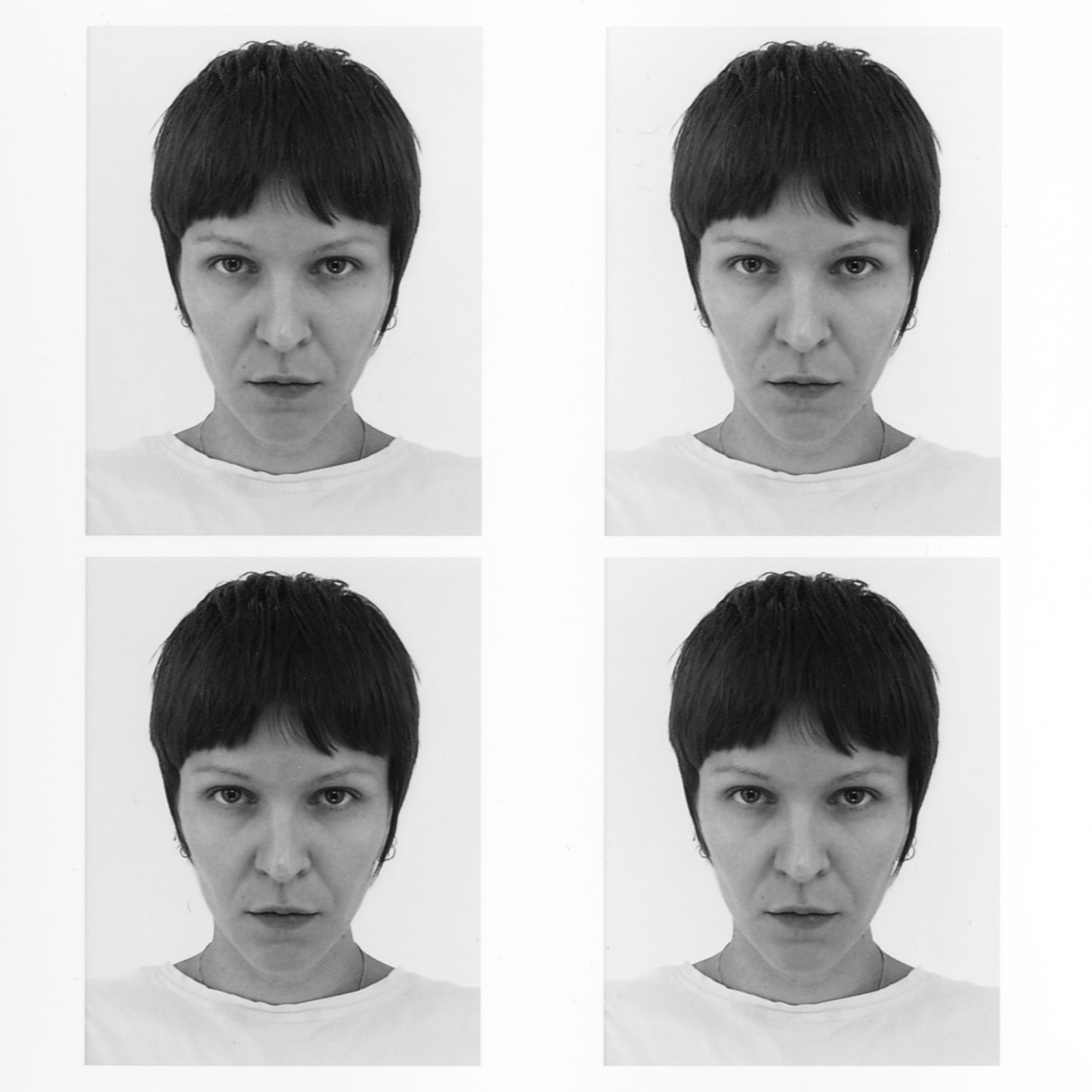
Veronika Valtonen is an artist and designer based in Helsinki and Berlin. Her practice is focused on the textuality and interpretability of found forms, drawing on methods of asemic writing and apophenia. By seeking new narratives through typographic remnants, her works interrogate the technonatural relationships of the present world through the telling of future histories.
‘Letters for a Post-Literate World’ is the title of her MA thesis from the Visual Communication Design program at Aalto University. Framed against the backdrop of a rapidly developing technological landscape, it investigates the future of writing through the generation of a speculative storyworld. Through the depiction of an alternate future where practice of writing has gone extinct, the body of work emerges as a reflective mirror for a generation amongst an evolving state of literacy.
The Writing Agent
"The new computer codes have made us illiterate again. A new literate caste has arisen." Vilém Flusser555
2090, European mainland
In 2090, our society relies on electricity to live as much as it does on oxygen to breathe and on water to drink. Gravity-defying towers litter the horizons of self-contained cities, barricaded from the surrounding wastelands by vast, rectangular data centers. The protective infrastructure of the megapolis has become a necessary condition in order to survive the increasingly hazardous weather conditions of a warming planet, sheltering its inhabitants from superstorms carrying torrential rains and tornadoes with winds up to hundreds of kilometers per hour. Reaching as far as the eye can see, and then disappearing into the distance, the sprawling technoscape lays a metallic cloak over the earth, rendering its natural formation invisible.
The plastic waste enclosing the city was surmounted by burning it for energy, amounting to a clouded dome of semi-toxic gases. As the cloudage eventually got too dense to let in any sunlight, skyscrapers reaching thousands of floors emerged to pierce the thick smog encloaking the earth. While the buildings kept rising in search of bluer skies, the lower parts of the city remained in a perpetual state of dim. Far from the reach of the sun, the only light in these atmospheres is cast by the LED glow of the all-encompassing screens, diffused by the thick haze. Occasionally, a faint flickering appears, projected from the transmission signals of wearable interfaces worn by fleeting city dwellers.
In the dark of the megapolis, time began to be measured in Outages of electrical power instead of days or years, as the sun became unreliable in the smog. Caused by the strong rains and winds lashing the outer barriers of the city, these sporadic disappearances of artificial light came to replace the circadian rhythm in recording events of importance. While total darkness would never remain for long due to a stronghold of energy reserves and backup generators, the abrupt power cut would always cause a blip in the life of the city. For a society dependent on electrical machinery, a prolonged state of disconnection could also present dangerous risks in safety, from blocking access to vital health services to inducing accidents on the autonomous roadways encircling the city.
From haptic communication systems to biometrically controlled borders, in 2090, information travels through an expansive network of embedded technologies. As audiovisual mediums continued to reign in the dopamine-infused battle between large corporations for maximum screen time, the new modes of connection favoured models with more instantaneous rewards, introduced through physical interactions. Guided by smart sensors that transcribed bodily information into data, the entire breadth of the senses became available for instigating a digital chain of commands. As textual contents became more tedious to process against the richness of embodied data, many eventually lost the practice of writing altogether, introducing an era for a new kind of literacy556 operating beyond alphabetic knowledge.
Though, as it had been ingrained in the muscle memory of entire generations, the total abandonment of writing felt close to the deterioration of thought itself for many. But as languages became increasingly intertwined with computational logic, due to the progressive evolution of our intelligent technologies, so did the thinking of our species also adapt to the binary mechanics of the machines around us. As for large language models, words were but linguistic components to an algorithm that functioned more like a mathematical equation, a predictable likelihood, or a solution to a given problem, devoid of any emotional or situational value. Despite its reign of millennia, writing too, had been but a single step in the evolutionary development of human communication.
Yet, some writers remained. In the lowest levels of the city, near the scorched earth, a deep mechanical hum escapes from its vacant office complexes and abandoned school buildings. Here, even the omnipresent screens do not shine their white light any longer, for the infrastructure of the city has become historically layered with the older generations subsisting beneath the newer ones above. If one were to perforate the entire structure open with a vertical cut, one could examine the development of a complete civilisation557, layer by layer. Accompanied by the steadily pulsating beat of electricity, which had become inescapable across any frequency, the empty corridors of these bygone buildings vibrate softly in response to the movements of the mass above.
No biological organism roams these hot, compressed zones any longer, for the ground has been depleted of its oxygen-producing vitality, and the sun remains too high above the noxious clouds. Creeping across the walls and disappearing through them, a maze of connections is formed between this room and others, supported by clear plastic tubes containing electrical wires. Muted rainbow colours shining through their yellowing skin558, aged by heat and time, they remain the watchful spectators of this near-subterranean world. Sheltered from the natural elements, as if in a glass box, the last living residents of this space are supported by a tingling voltage, forgotten by the workings of the world above.
Almost mythological in nature, most people refer to these beings as writing agents, known for inhabiting the darkest levels of the densely manifold technosphere. Unlike their human ancestors, these metaphysical scribes559 do not require the nourishment of oxygen or water in order to function, but feed on a stable supply of electrical power, left untouched after the hasty migration to higher ground. Where artificial light cannot mark the sign of an Outage, the RAM560 of an agent does not register the passing of time in its linear sense, but rather as a constant cycle between the beginning and the end of its internal program.
Though now a distant relic of late-era digital capitalism, scribal services were once common amongst designers, scholars and executives alike. In a world overcome by toxic fumes, following a constant influx of newborn city dwellers, it became necessary for mundane tasks to become mechanically optimised to support the increasing production needs of a growing city. Cyborg companions were designed to assist in matters of everyday life and administration, taking on the physical labour so their human counterparts could divert their attention to more complex issues (followed by more complex enjoyments). From secretarial work to acting as chauffeurs, or even as health clinicians, agents were seen as trustworthy and objective in their duties. While some were given the recognisable physical appearance and mannerisms of a humanoid, some agents were rather abstract, not tied to any specific place in the physical realm, for they operated in various dimensions all at once.
Scraping for resources in their personal database, the writing agent enjoys a simple and quiet solitude of an artist in their studio, one that comprises endless possibilities for words and for worlds. As a sculptor works through stone, hacking, sawing, drilling, honing, the agent spends its days penning561 analytical reports for the board meetings of local committees, handwritten notes for loved ones on their special days, and signatures for birth certificates and other documents of personal importance. The primary business of a writing agent is to create the real and unreal stories for the sole pleasure of others, constructed in the veiled privacy of its database.
Despite their evident limits in computational scope, or incapabilities in computing questions of ouroborean562 nature, a writing agent was less likely to make a mistake due to a twitch in the palm of their hand, or suffer from chronic pain resulting from repetitive work. An endless amount of times, an agent could happily follow the same script of code, as if encountering a brilliant surprise each time upon re-entering the loop. In a cyborgian world, it was also more efficient to be able to explain things by zeroes and ones, through the yes and the no, fabricating an entirely new philosophy of thought in a neomaterialist567 society governed by both biological and artificial life alike.
But as mainstream culture continued its rapid emigration to the immersive sphere563 ruled by auditory and tactile media, even the most devoted traditionalists of text soon swayed in the face of a growing appeal to the new modes of sensory communication. The hyperinflated economy based on gathering human attention in the matrix of digital advertisements through personal devices required more instant engagement from their users, eventually rendering the writing agent, too, obsolete.
A distant memory of a different kind of literacy lingers here564, at the bottom of this city, jittering hands busy at work. The last guardian in a long legacy for a world in writing, the writing agent may in fact be the only one left in this world who still knows the craft of the word, performing their latest software update as an endless choreography, legible to no-one. For as long as there is the tingling sensation of voltage entering through its veins of aluminum and copper, sheltered from the corrosive forces of the elements, there are words to observe, categorise and replicate.
Within these rooms, the quiet echo of a monotonous scraping remains, unbeknownst of its insignificance to the new world above. Apart from the slow discolouration of the all-encompassing tubes, with their ribbons of red, green, yellow and blue, time occasionally reveals its presence in the form of an abrupt silence. Frozen on their trails, as if in a game of statues, the machines wait patiently, wholly unconscious of the disruption to their eternal routine.
Upon reawakening from the dreamless sleep caused by a looming Outage, there will be no recognisable differences to the agent's surroundings. In its incessant search for the next combination of characters, prompted by the swift resume back to its program, the agent fills the room again, slowly, with a quiet sound. And despite the hundreds and thousands of lines the writing agent may have written, it carries on eagerly at its work, slowly eroding565 the surface upon which it writes.